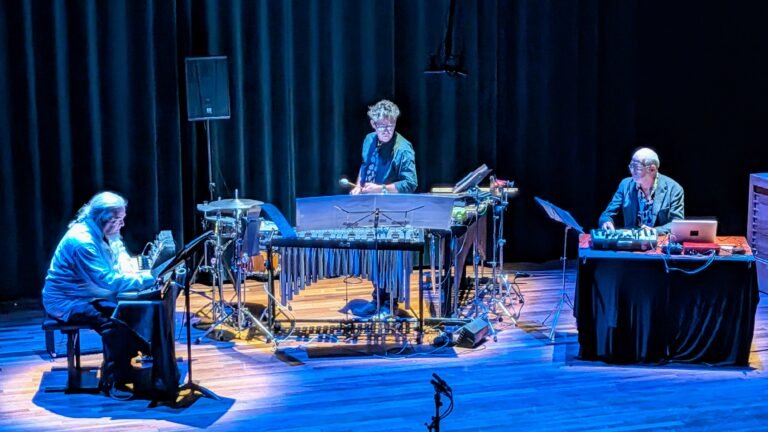
Event at Theater Kikker, Utrecht, Sept 12, 2026
Tera de Marez Oyens Prize 2026
Four Voices, One Difficult Verdict
By: Storm Bakker
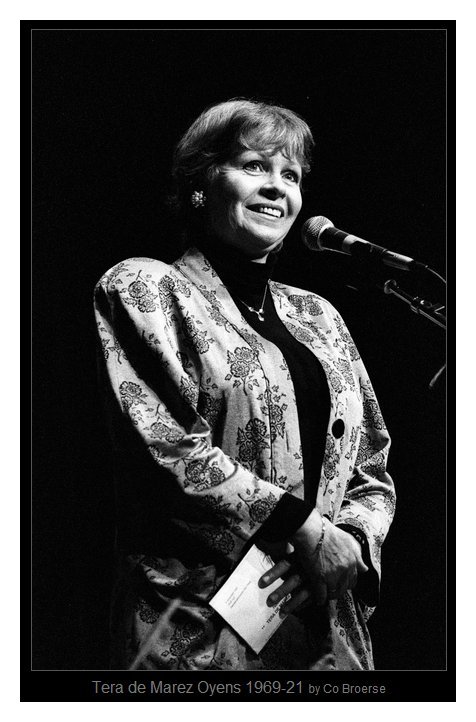
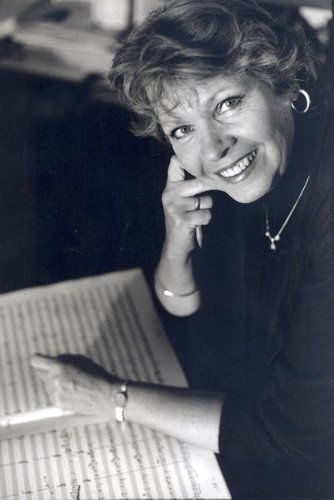
“Competitions are for horses, not musicians,” Béla Bartók is reputed to have said. He may well have had a point. Judging musical compositions is, ultimately, an exercise in taste, particularly when the works in question are contemporary, experimental, and deliberately resistant to conventional categories. The jury of the Tera de Marez Oyens Prize faced an almost impossible task: how do you compare four radically different approaches to contemporary music? The difficulty was evident at the event held at Theater Kikker in Utrecht on 12 September. The jury, consisting of composer, artistic director, and teacher Aspasia Nasopoulou; composer, programmer, and teacher Jonas Bisquert; artistic director, teacher, and bass trombonist Brandt Attema; and harpist Astrid Haring and musicologist Ellen Overweel, was chaired by David de Marez Oyens, son of the celebrated composer Tera de Marez Oyens (1932-1996) and himself a performing musician and teacher.
Afterwards, De Marez Oyens readily acknowledged that the overall standard had been exceptionally high, making the final decision correspondingly difficult. The prize, established after Tera de Marez Oyens’s death in 1996 by the Tera de Marez Oyens Fonds, is awarded every two years to a recently graduated contemporary composer in the Netherlands. The winner receives €2,500 toward a new short work for professional ensemble, to be performed at the following Gaudeamus Festival. The composition will also be published by Donemus. The competition is deliberately broad. Entries are judged on the quality of the composition and score, originality, and practical performability, as well as on their ability to take an audience somewhere through narrative, engagement, or atmosphere. There are no stylistic restrictions: electronics and performance elements are equally welcome. The only firm limit is duration: ten minutes.
The four finalists in 2026 were Lydia Gardiner from Australia, Annija Anna Zarina from Latvia, Finland’s Jonatàn Repokari, and Dutch composer Amba Klapwijk. Three of the four had studied at the Royal Conservatoire The Hague; Repokari studied at Fontys Academy of the Arts in Tilburg. The strong representation from The Hague once again underlines the conservatoire’s prominent position in experimental composition, electronic music, sonology, and sound art in the Netherlands. Its Institute of Sonology, established there in 1986, has roots in Utrecht’s Studio for Electronic Music, founded under Gottfried Michael Koenig, a former associate of Karlheinz Stockhausen in Cologne. Koenig was also the pioneer who introduced Tera de Marez Oyens to electronic music in the 1960s.
The prize, established after Tera de Marez Oyens died in 1996 by the Tera de Marez Oyens Fonds, is awarded every two years to a recently graduated contemporary composer in the Netherlands. The winner receives €2,500 toward a new short work for professional ensemble, which is performed at the following Gaudeamus Festival. Donemus also publishes the composition.The competition is deliberately broad. Entries are judged on composition and score quality, originality, and practical performability, alongside their ability to engage an audience through narrative or atmosphere. Stylistic restrictions are absent, welcoming electronics and performance elements equally. Duration represents the sole firm limit at ten minutes.
The four finalists in 2026 were Lydia Gardiner from Australia, Annija Anna Zarina from Latvia, Finland’s Jonatàn Repokari and Dutch composer Amba Klapwijk. Three of the four had studied at the Royal Conservatoire The Hague; Repokari studied at Fontys Academy of the Arts in Tilburg. The strong representation from The Hague once again underlines the conservatoire’s prominent position in experimental composition, electronic music, sonology and sound art in the Netherlands. Its Institute of Sonology, established there in 1986, has roots in Utrecht’s Studio for Electronic Music, founded under Gottfried Michael Koenig, a former associate of Karlheinz Stockhausen in Cologne. Koenig was also the pioneer who introduced Tera de Marez Oyens to electronic music in the 1960s.
Lydia Gardiner: The Song of Leendert Hasenbosch
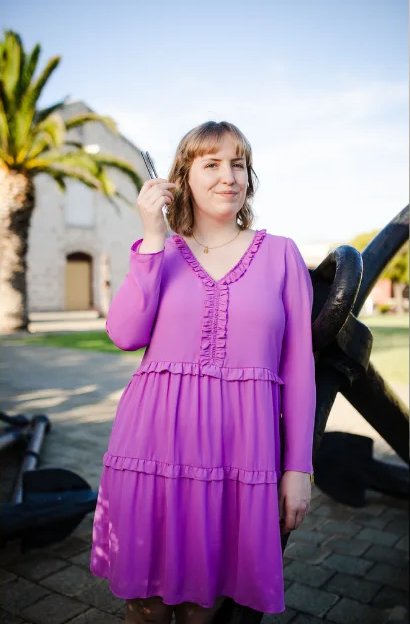
The first finalist was Australian composer Lydia Gardiner, who completed a first-class bachelor’s degree in composition at the University of Western Australia before beginning her master’s studies at the Royal Conservatoire The Hague in 2023. Her entry, The Song of Leendert Hasenbosch, was performed by tenor Gijsbert Westland, accompanied by Alex Baker on viola da gamba and Joël Boone on chamber organ. A tape part was also heard, although it contributed little beyond a layer of background noise. The subject is extraordinary. Leendert Hasenbosch was an eighteenth-century VOC soldier who, in 1725, was put ashore on the uninhabited island of Ascension as punishment for sodomy. He survived for approximately six months by drinking his own urine and turtle blood before disappearing without a trace. His skeleton was never found. The choice of subject becomes less surprising when one discovers that the story occurred close to the Australian coastline where Gardiner was born. The piece forms part of her larger work, The Zeewyk Passion, connecting Hasenbosch’s fate with the history of the VOC ship Zeewyk, which sank off the coast of Western Australia in 1727. On that occasion, two young men were likewise caught engaging in homosexual acts and subjected to the same brutal punishment.
Gardiner describes her compositional language as an attempt to reinvent tonality while carefully manipulating timbre to create imagery and establish a communicative link between composer, performer and listener. In practice, however, her music is considerably more direct and more convincing than such an elaborate artist statement might suggest. There are echoes of Renaissance and Baroque vocal writing, with ascending melodic gestures that seem to reach towards the heavens, perhaps reflecting the name of Hasenbosch’s final exile. Yet the ends of phrases repeatedly refuse resolution. Rather than offering consolation, the music leaves questions hanging in the air, providing an effective musical counterpart to Hasenbosch’s uncertain fate. The tenor is sparingly accompanied: the viola da gamba provides an occasionally unsettling counterweight, while the chamber organ contributes something almost disarmingly matter-of-fact. The resulting tension between early-music associations and contemporary sonority is one of the work’s strongest qualities. Still, the performance in Utrecht did not quite possess the authority required to make Gardiner an obvious winner. Hopefully, Gardiner, herself a singer, might eventually consider performing her own song, although this particular version was written for a tenor.
Annija Anna Zarina: I
The second finalist, Latvian composer Annija Anna Zarina, studied composition in Riga and at the Royal Conservatoire The Hague and is currently pursuing a master’s degree at Yale. Her work, simply titled I, is scored for amplified voice and fixed media. It was performed by fellow Latvian performer Annija Krivjonoka, surrounded by strategically placed loudspeakers. The premise is deceptively simple. Each sentence consists of a subject and the conjugated forms of a particular verb. The past tense emerged from a speaker positioned behind the audience, while the live performer represented the present and the future came from the rear of the stage. Everything was whispered in English. At first, the mechanism is clear and almost disarmingly simple. Then the pace increases. Question and answer begin to overlap. Words dissolve into streams of phonemes. What began as intelligible language becomes a continuous litany of echoes, eventually settling into something resembling a mantra. This is where Zarina’s work becomes particularly compelling. I is less concerned with melody in the traditional sense than with the perceptual consequences of language, repetition, and speed. The listener’s own brain becomes part of the composition. The experience is hypnotic. The regularity of the speech initially has an almost soothing effect; gradually, however, the repetition becomes trance-like.
At one point the sound suddenly stops. Darkness follows. For a few seconds, there is nothing. Then the sound returns.
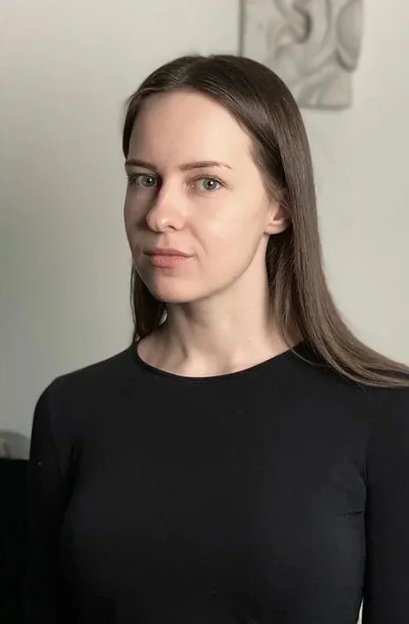
The effect is surprisingly powerful. Familiar linguistic structures have been stripped of their semantic certainty. Vowels and consonants seem to rearrange themselves. The listener begins to hear words that were never actually spoken. Zarina achieves this without elaborate technology or theatrical excess. Her concept is remarkably economical, and precisely because the mechanism is so simple, the perceptual effect becomes difficult to escape. When the piece finally ends, the room seems to wake up with it. The audience applauds, not merely because the work has finished, but because it has succeeded in doing precisely what the competition’s criteria demand: it has taken the listener somewhere.
Amba Klapwijk: Teder
Dutch composer Amba Klapwijk was the third finalist. She studied at the Royal Conservatoire The Hague with composers including Calliope Tsoupaki, Cornelis de Bondt, Jan van der Putte and Peter Adriaansz. Her contribution, Teder (“Tender”), was performed by pianist Carlota Carvalho using two e-bows. An e-bow is a small electromagnetic device that causes a string to vibrate without being struck. It is familiar primarily from experimental guitar playing, but Klapwijk uses two of them directly on the strings of a grand piano. The technique requires extraordinary precision: move the devices too far and the intended resonance can collapse into an unwanted sound.
It is worth noting that this technique was not entirely new within Klapwijk’s artistic environment: her teacher, the Dutch-American composer Peter Adriaansz, had already explored the use of e-bows on the piano in his Waves 1–13 (2007–08) and Prana (2007).
Carvalho handled the task with remarkable calm and concentration. Leaning over the piano’s open soundboard, beautifully illuminated on stage, she seemed almost to disappear into the instrument.The e-bows produced seemingly endless resonances, tones suspended in the air and filled with delicate upper harmonics. The effect was contemplative rather than confrontational. There was little of the abrasive dissonance one might expect from experimental piano music; instead, Klapwijk created a world of sustained, consonant sonorities and slowly shifting overtones.
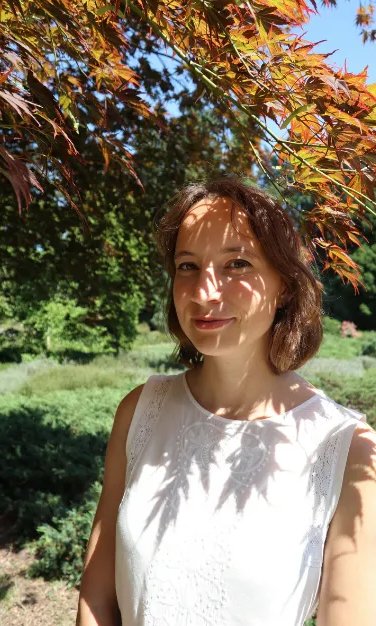
The piece is consistent with Klapwijk’s wider fascination with landscape, nature, poetry and visual art. She was an artist-in-residence at the Iowa Lakeside Laboratory in 2019 and has since had works performed by ensembles including Herz Ensemble, the Residentie Orkest, Rotterdam Student Orchestra and the New European Ensemble. Teder was not a premiere in Utrecht. Klapwijk and Carvalho had performed it the previous day at Batavierhuis in Rotterdam as part of A Cloud of Thought. The work’s quietness is both its strength and its limitation. For listeners looking for aggression or radical rupture, it may seem almost too gentle. But within its own aesthetic, Teder creates a remarkably concentrated moment of suspended time.
Jonatàn Repokari: Kenen Muisto Tämä On?
The fourth and final candidate was Finnish composer Jonatàn Repokari, who studied at Fontys Academy of the Arts in Tilburg. His music has previously been praised for its “intimate, atmospheric expressiveness, in which emotional intensity is combined with a great sensitivity to text and sound” (Marc Versteeg). Expectations were therefore high, particularly when it became clear that Repokari draws inspiration from the world of legend and mythology. New music can acquire an additional layer of meaning, even greater depth, when it engages with an older hymn, folk song or legend, allowing the listener to hear the dialogue between past and present.
Repokari is also active as a conductor and was selected last year for the New Music Composers Pitch. Among his earlier works is Väinämöinen Builds the Magic Kantele, written for Brabant Koor, string orchestra and youth choir. The title refers to Väinämöinen, one of the central figures of Finnish mythology, who creates the traditional kantele from the jawbone of a giant pike. The kantele is a kind of plucked board zither whose enchanted sound, according to the Kalevala, can captivate animals and spirits of nature. Few instruments carry a stronger symbolic association with Finnish identity.
For the Tera de Marez Oyens Prize, Repokari presented Kenen Muisto Tämä On? (“Whose Memory Is This?”), scored for violin, viola and cello. The work was written for De Streek in 2025, under a commission that called for old folk songs to serve as inspiration for new music.
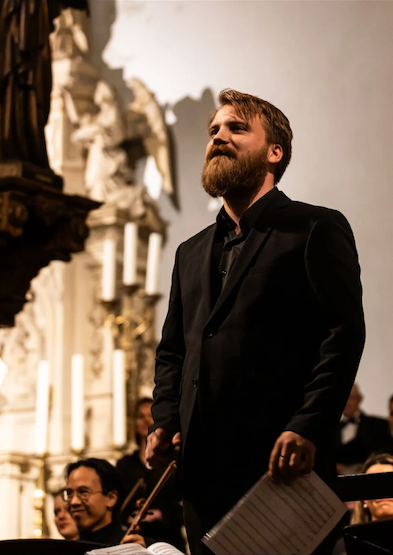
In his introductory statement, Repokari explained that the composition was based on an ancient Brabant song. Unfortunately, the source was not identified clearly enough for the audience to establish the connection. That is a missed opportunity. When contemporary music engages with historical or folkloric material, knowing the source is essential to the listening experience. Without it, the listener is left to search for a musical trace that may or may not be there. And in this case, there was little to hold on to. No recognizable melody emerged, let alone an identifiable Brabant folk tune. The connection remained essentially conceptual. The title, Whose Memory Is This?, points in another direction. Rather than hearing a musical reconstruction of folklore, one might interpret the piece as an exploration of memory itself: the strange territory in which recollections become unstable and experiences can be misattributed. A memory may feel entirely authentic while its source is uncertain.
This ambiguity seemed more relevant to the music than the Brabant folklore announced beforehand. One possible reading is that Repokari is interested in a state of psychological diffusion, in which the boundaries between thought, emotion, belief and perception begin to blur. It is intriguing material, certainly, but the connection with Brabant folklore remained difficult to hear. Musically, however, the performance was beyond reproach. The string trio consisted of violinist Ruña ’t Hart, violist Iteke Wiebenga and cellist Anastasia Feruleva. ’t Hart established herself at a young age as a versatile performer and studied with Vera Beths and Shunske Sato, moving comfortably between Baroque repertoire and contemporary music. Wiebenga has rapidly developed a formidable reputation as a violist, working with prominent artists and ensembles in the Netherlands and abroad, including the Residentie Orkest. Cellist Feruleva, originally from Russia, has likewise attracted international praise for her expressive intensity, technical command and distinctive musical personality.
From the very first note, the trio approached Repokari’s score with absolute concentration. The music is rich in extended string techniques: glissandi, pizzicati, tremolos and martelé bowing create a constantly shifting sonic surface. Repokari moves freely between languid, quasi-atonal passages, sharply dissonant sonorities, unexpected harmonic turns and fleeting fragments that seem to have escaped from a Romantic chamber-music repertoire. The result is a work of considerable textural variety, even if its underlying narrative remains elusive. There was, however, another frustrating aspect: the piece seemed to end just as it was beginning to take hold. Its brevity left too little time for its musical and conceptual ambiguities to settle in the ear.
The Verdict
With all four finalists having performed, the jury withdrew to deliberate. The interval was filled by a performance from the MOM Consort of Mixed Feelings (1973) by Tera de Marez Oyens, originally graphically scored for percussion and four tape parts. It was a fitting reminder that the evening’s fascination with electronics, unconventional performance techniques and questions of perception has deep roots in the work of the composer whose name the prize bears. When the jury returned, chairman David de Marez Oyens announced the decision. The 2026 Tera de Marez Oyens Prize went to Annija Anna Zarina. The jury particularly praised the performance of I, emphasizing the way in which the listener was completely drawn into the work. They highlighted the highly effective stage arrangement, the clarity of the score and its instructions, and the simplicity of Zarina’s concept, which developed convincingly over the course of the piece.
The decision brought the evening to a close with a work that had perhaps demonstrated most explicitly one of the central challenges (and possibilities) of contemporary music: a composition does not necessarily need a large apparatus, a complex narrative or an abundance of material to create a powerful experience. Gardiner looked backwards, connecting contemporary composition with early music and a disturbing historical narrative. Klapwijk suspended time through resonance. Repokari turned towards memory, folklore and the instability of recollection. Zarina, by contrast, placed the listener’s own perception at the centre of the work.
Four very different answers to the same question: what can a short contemporary composition do? On this particular evening, the jury’s answer was Zarina.