
Album review
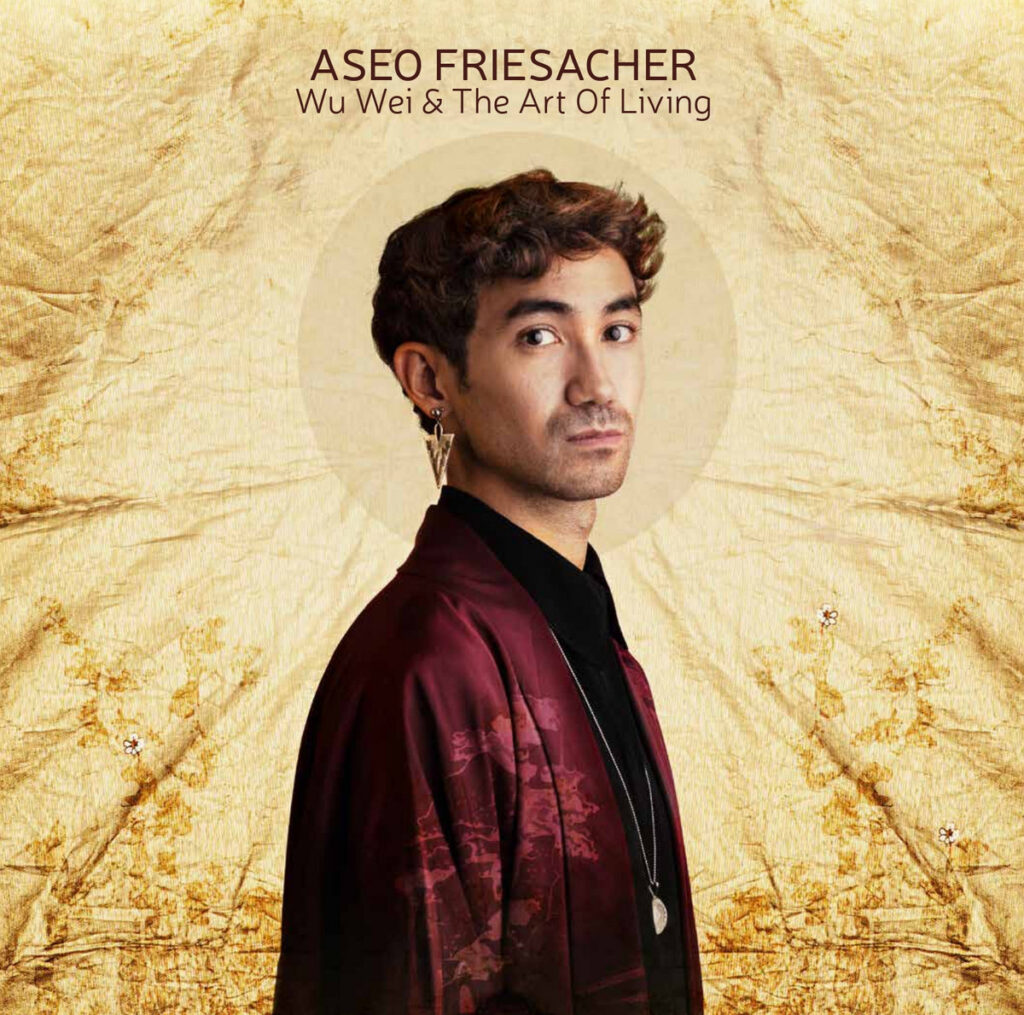
Aseo Friesacher
Wu Wei & The Art Of Living
Challenge Records
Text: Robin Boer
Aseo Friesacher is a Japanese-Austrian pianist and composer whose career began in Vienna. His early musical development was shaped by his tenure in the Vienna Boys’ Choir, leading to performances at Carnegie Hall and Tokyo’s Opera City Hall. His formal education includes the Vienna Conservatory of Music and Arts under Aaron Wonesch, the Codarts Conservatory in Rotterdam, and a Master’s degree from the Royal Conservatoire in The Hague.
Friesacher’s technical pedigree is supplemented by workshops with Harold Mabern, Cory Henry, and Peter Beets. His professional accolades include first prize at the 2014 Podium Jazz Competition and a second-prize finish at the 2022 Gexto Jazz Competition.
Evolutionary Context: From Kaiju to the Trio
Friesacher’s discography reflects a progressive synthesis of his dual cultural heritage. His 2024 release with the Kaiju Project utilized traditional Japanese instrumentation (shakuhachi and shinobue) to reinterpret folk songs within a contemporary jazz framework. That project established a distinct voice characterized by a blend of European aesthetics and Eastern “mystique.”
His latest offering, Wu Wei & The Art Of Living, represents a transition toward a more intimate, autobiographical medium. While credited to Friesacher individually, the album features the Aseo Trio, marking a shift from the expansive, ensemble-heavy textures of the Kaiju Project toward a refined “world jazz” philosophy that incorporates influences from Japan, India, and the Middle East.
Philosophical Architecture and Composition
The album is structured as a narrative arc documenting a maturing musical identity. Each composition functions as a movement within a broader philosophical inquiry. The title, Wu Wei, refers to the Taoist concept of “effortless action” or moving with the flow of existence: a principle that appears to govern the improvisational fluidity of the record.
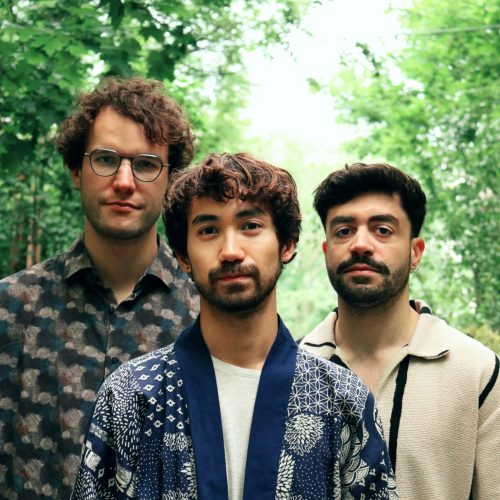
The core trio consists of Johannes Fend on bass and Nikolas Tsangaris on drums. The ensemble is strategically expanded on specific tracks to include Koen Smits on trumpet and Claudio Jr. de Rosa on tenor saxophone.
The thematic scope of the tracks is notably broad:
“Samsara” explores the cyclic nature of existence through rhythmic repetition and development.
“Healing” focuses on empathy and collective restoration.
“Reflections In The Water” serves as a bridge to Western classical traditions, specifically drawing from the harmonic language of the Impressionist era.
A central pillar of the album is “Blues for Sadako,” a tribute to Sadako Sasaki, the young girl who became a symbol of peace following the Hiroshima bombing. Stylistically, the piece invokes the energy and spiritual gravity of the John Coltrane Classic Quartet. By dedicating this work to victims of war, Friesacher elevates the album from a technical exercise to a vessel for historical remembrance and human resilience.
Technical Performance and Atmospheric Impact
The primary achievement of Wu Wei & The Art Of Living is the successful integration of high-level technical complexity with a “warm” and accessible sonic palette. Friesacher’s piano timbre is gentle, avoiding the percussive harshness often found in contemporary jazz, which allows the intricate arrangements to feel introspective rather than academic.
The chemistry between Friesacher, Fend, and Tsangaris suggests a deeply ingrained familiarity. This allows the trio to navigate complex time signatures and cultural motifs (such as those drawn from Middle Eastern scales) with a naturalness that minimizes the “friction” typically associated with cross-genre fusion.
The listener is presented with a “warm bath” of sound; the production maintains a consistent emotional temperature that is spiritual and atmospheric. It is a work that manages to be adventurous in its global inspirations while remaining rooted in the European jazz tradition of lyrical, thoughtful improvisation.
Release Information
Wu Wei & The Art Of Living was released in the Benelux and Germany on January 30, 2026, via Challenge Records. The initial global release occurred on November 24, 2025.
Line-up:
Aseo Friesacher: Piano
Johannes Fend: Double bass
Nikolas Tsangaris: Percussion
Koen Smits: Trumpet
Claudio Jr. de Rosa: Tenor Saxophone
Links